Why You're Even Asking This
You just bought a 3D printer, or you're about to. Someone (a YouTube video, a Reddit thread, a forum post from 2019) told you that you need to decide between PLA and PETG before you print anything. Now you're reading spec comparisons full of tensile strength numbers and glass transition temperatures and you feel more confused than when you started.
Here's what's actually happening: the 3D printing hobby has a well-documented problem with over-explaining things to beginners. People who know a lot about filament love to share everything they know about filament. What they don't always do is tell you the short version: the version a friend who prints would give you over coffee.
This is that version.
By the end of this article you will know exactly which filament to start with, why, and when (if ever) you need to switch. No specs tables. No tensile strength graphs. Just the answer.

What PLA Actually Is
PLA stands for Polylactic Acid. You don't need to remember that. What you do need to know is that PLA is made from plant starch (corn, sugarcane, cassava) which makes it biodegradable under industrial composting conditions and, more practically, means it doesn't off-gas the kind of fumes that require a ventilation system when it melts.
In plain terms: PLA is plastic that is unusually easy to print with, unusually forgiving when things go wrong, and unusually affordable. It melts at a relatively low temperature (around 190–220°C) which means it doesn't need an enclosure, doesn't warp badly in open air, and plays nicely with nearly every FDM printer on the market.
It prints at normal room temperature. It sticks to almost any print surface. It doesn't smell bad. When you make a mistake (and you will make mistakes) PLA fails in obvious, diagnosable ways rather than mysterious ones. You can see exactly what went wrong and fix it.
That's why it's the beginner material. Not because it's cheap (though it is). Because it lets you focus on learning your printer instead of fighting your filament.
.jpg)
What PETG Actually Is
PETG stands for Polyethylene Terephthalate Glycol. Still don't need to remember that. What matters is that PETG is essentially the plastic used to make water bottles (PET) with glycol added to make it less brittle and less prone to hazing when heated. That modification makes it printable on desktop FDM machines.
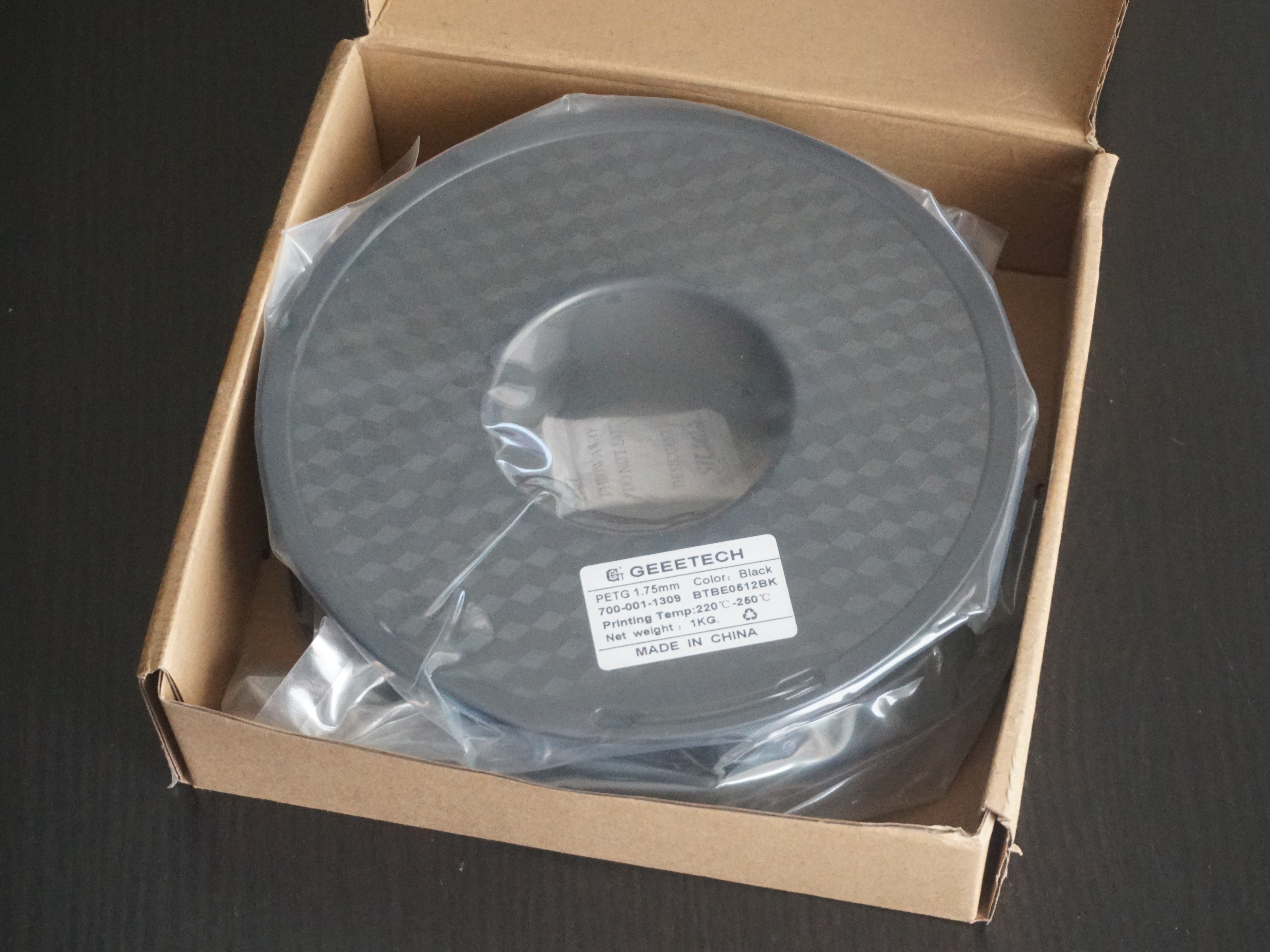
The result is a filament that's noticeably stronger and more flexible than PLA. It doesn't snap under stress the way PLA can. It handles higher temperatures (it won't warp sitting in a hot car the way a PLA print will). It's more resistant to moisture, chemicals, and outdoor exposure. And it has a slightly glossy finish that looks good on functional parts.
On paper, PETG sounds better than PLA in almost every way. More durable. More heat-resistant. More flexible. Tougher.
Here's the part they don't put in the headline: PETG is significantly harder to print with. It requires higher temperatures (around 230–250°C for the nozzle, 70–90°C for the bed). It strings aggressively, leaving fine plastic hairs between parts of your print that require careful retraction tuning to eliminate. It sticks to print surfaces so well that it can damage them when you remove the print (you need a release agent or a careful separation technique). It absorbs moisture from the air faster than PLA, which causes popping, bubbling, and weak layer bonding if you leave it on the printer for a few days without a dry box.
PETG is a fantastic material. It's also a material that rewards experience. It has more variables to get right, and when those variables are off, the failure modes are harder to diagnose.
The Differences That Actually Matter to You Right Now
Forget the spec sheets. Here are the differences that will affect your actual experience in your first month of printing.
Setup difficulty. PLA works with almost no configuration. Load it, set the temperature to 210°C nozzle and 60°C bed, print. PETG needs you to tune retraction carefully to prevent stringing, dial in higher temperatures, and prep your bed surface to prevent it from bonding too aggressively. That's three separate variables you're wrestling with before you've learned the basics.
Forgiveness. PLA is forgiving. If your bed isn't perfectly level, PLA still usually sticks. If your retraction settings are slightly off, PLA produces minor stringing that's easy to clean up. PETG is less patient. Mistakes that PLA tolerates, PETG punishes with failed prints, strings that look like cobwebs, or prints that rip the surface coating off your bed when you remove them.
Print quality out of the box. PLA produces sharp, clean, matte prints with very little effort. PETG can look slightly rougher on the surface, especially if you haven't tuned the retraction and temperature precisely. PLA's lower printing temperature also means it cools faster, which gives you sharper details (important if you're printing anything with fine features).
Heat resistance in daily use. This is PETG's genuine advantage. A PLA print left on the dashboard of a car on a summer afternoon will warp. A PLA phone stand will slowly deform if it sits near a heat vent. PETG won't. For parts that live in warm environments (outdoors, near windows, in any enclosed space that gets hot), PLA's low heat resistance is a real limitation.
Cost. PLA is about 20–25% cheaper than PETG per kilogram on average. When you're going through a few kilograms learning on your new printer, that adds up.
The honest summary: PETG's advantages matter when you need a part to survive heat, mechanical stress, outdoor exposure, or chemical contact. For the decorative prints, household organizers, and learning projects that make up 90% of beginner printing (those advantages are irrelevant).
If you're not sure whether your print needs PETG's durability, it almost certainly doesn't. The use cases for PETG (high heat, mechanical load, outdoor use) are specific and obvious when you're in them.
When Would You Actually Switch to PETG?
There are genuine use cases for PETG, and they're worth knowing (not so you can start with it, but so you know when to make the switch later).
Outdoor prints. Anything that lives outside (a garden label, a bracket mounted to an exterior wall, a component on a vehicle) needs UV and weather resistance that PLA cannot provide. PETG holds up. PLA won't last a season in direct sunlight.
Prints that go near heat. Car interior parts. Anything near a radiator or heat vent. Enclosures for electronics that generate warmth. PLA softens around 60°C (significantly lower than you'd expect). PETG handles up to 80°C without deforming.
Mechanical parts under load. Hinges, brackets, clips, functional components that flex and bear weight repeatedly. PLA is rigid and can be brittle (it snaps under sudden stress rather than bending). PETG bends before it breaks, which is exactly what you want in a load-bearing part.
Food-adjacent prints. PETG is FDA-approved for food contact. PLA is technically biodegradable but isn't considered food-safe in printed form due to layer lines that trap bacteria. If you're printing a cookie cutter or a container, PETG is the safer choice.
Notice the pattern: all of these are specific, practical use cases with a clear functional reason to need the extra performance. None of them are "I want my first print to come out well" (which is the actual reason you're looking at filament right now).
Once you've printed 15–20 things in PLA and you understand how your printer behaves, picking up PETG takes about one or two print attempts to dial in. The knowledge transfers directly. The jump is much smaller than it looks from the beginning.

The Mistake Most Beginners Make With Filament
Starting with PETG because the specs look better is probably the most common beginner mistake in this hobby (and it makes sense on paper). More durable. More heat-resistant. More flexible. Why would anyone settle for less?
Because specs are not the same thing as printability.
A beginner printing PETG for the first time is dealing with stringing they don't know how to tune away, a print surface that may bond too aggressively and tear when removed, a filament that's probably absorbed some moisture just sitting in its packaging, and temperatures that punish imprecise settings more harshly than PLA would. All of that while simultaneously learning how the slicer works, what bed leveling actually means, and why their first layer looks the way it looks.
That's too many problems at once. You cannot debug your printer if you're also debugging your filament.
The second common mistake: buying whatever was on sale without checking compatibility. Most consumer printers handle PLA and PETG without issue, but some budget machines cap out at 230°C nozzle temperature (just barely enough for PETG and with no margin for error). Check your printer's maximum nozzle temperature before you buy a spool of PETG. If it's under 240°C, you're pushing the machine's limits.
The third mistake: storing filament badly and then blaming the filament. Both PLA and PETG absorb moisture from the air. Wet filament produces brittle prints, popping noises while printing, and surface defects that look like calibration errors but aren't. Store your spools in sealed bags or containers with desiccant. This matters more with PETG than PLA, but it matters with both.
.jpg)
If your filament makes crackling or popping sounds while printing, stop the print. That's moisture boiling inside the filament. Dry it in an oven at 45–50°C for 4–6 hours, or invest in a filament dryer. Continuing to print wet filament makes the problem worse and can clog your nozzle.
The Answer: Start With PLA. Always.
This is not a close competition dressed up as a comparison article. The answer is PLA (and not just barely). Decisively, for most beginners, for most purposes, for most of the printing you'll do in your first six months.
Start with PLA because it lets you focus on learning your printer. Bed leveling, slicer settings, retraction, layer adhesion, temperature calibration (these are the skills that actually make you a good 3D printing operator, and you need clean material behavior to learn them). PLA gives you that. PETG introduces variables that obscure what you're learning.
Start with PLA because your first prints will almost certainly be things that don't need PETG. Phone stands. Cable organizers. Decorative objects. Small tools. Parts for projects. None of these require high heat resistance or exceptional mechanical strength. PLA is more than adequate.
Start with PLA because when things go wrong (and things will go wrong, because they always do), PLA's failure modes are legible. You can see what happened and why. PETG's failures are murkier, especially when you don't yet have a baseline for what correct behavior looks like.
When you've made 20 or 30 prints and you genuinely need a part that survives a hot car interior, or you're building something that needs to flex under load, or you're mounting something outdoors (that's when you order your first PETG spool). By then, you'll dial it in within two prints. It won't feel intimidating. It'll just feel like a slightly different material with slightly different settings.
That's the whole answer. PLA now, PETG when you have a specific reason to need it. Anyone who tells you otherwise is either selling you something or hasn't thought carefully about what beginners actually need.